
THE LIFE I WANT
What do you want your life to look like at 30?
An apartment in another city? A home of your own? A career you enjoy and a business on the side? Travel, a car you love, or the ability to help your family?
The Life I Want asks high school juniors and seniors to picture that life, make their own estimates, research the costs, and choose a financial goal to begin working toward.
- Grades 11 and 12
- 90 minutes
- No cost to students
A school workshop led by credit union educators.
Five parts of the life you imagine
Where I live
Choose a city and describe the home. Would you rent an apartment, own a condo, or buy a house?
How I work and earn
Describe the work you would enjoy and how you would earn. Consider a career, independent work, a business, or a combination.
What I own
Picture the car, truck, or other things you want. Make the details specific enough to research a price.
How I spend my time
Include travel, interests, family, and the activities you want room for in your life.
Who I support
Consider whether helping a parent, raising a family, or supporting someone else belongs in the life you imagine.
What students learn and take away
- How education and work choices connect to the income their imagined life would require.
- How to estimate a cost, research it, and compare the estimate with what they find.
- Why savings, credit, borrowing costs, and monthly expenses matter when buying a home or a car.
- How choices about housing, transportation, work, and family can affect one another.
- A first financial goal, a savings milestone, and one action they can take now.
What would it take to buy that condo?
One student imagines a Charlotte condo, work as a physical therapist with a sports training business, a Ford Bronco, travel twice a year, and helping their mother financially.
The student chooses the condo as a first goal. The educator guides the exercise; the student does the estimating and research.
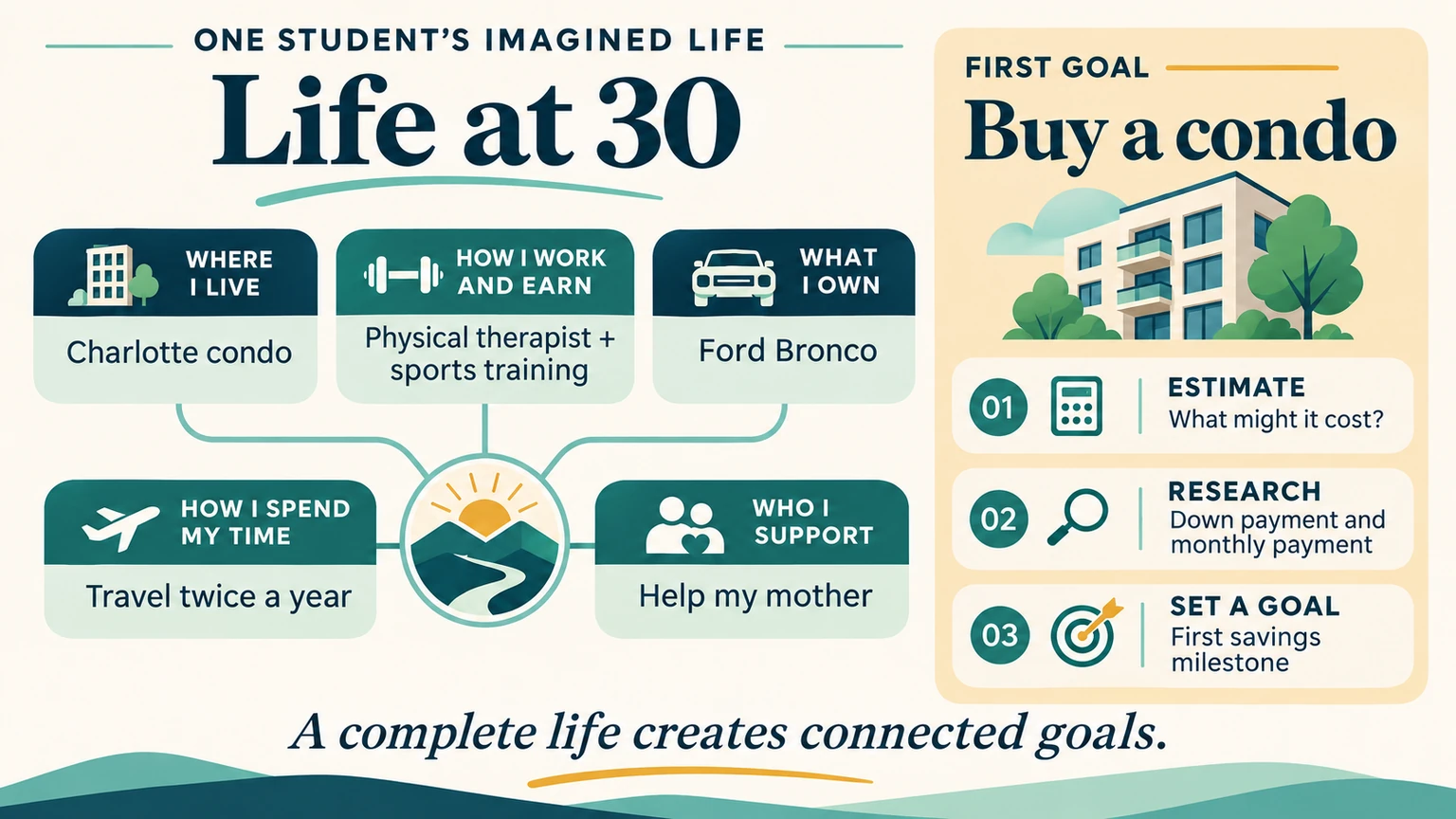
01 · Estimate
Take a first guess at what the condo might cost.
02 · Research
Find examples of purchase prices, down payments, and monthly payments. Record the assumptions behind the figures.
03 · Set a goal
Choose a first savings milestone and one step to take now.
What schools and credit union educators receive
A defined workshop to deliver
A 90 minute lesson with facilitator training, presentation slides, student worksheets, and parent materials.
Financial education connected to students' own interests
Students supply the ambitions. Educators use those ambitions to introduce income, saving, credit, and borrowing through choices the students want to understand.
Work students can take home
A written picture of life at 30, research notes, and a first goal create a basis for continued conversations with family and educators.
For schools and credit union educators
Bring The Life I Want to a school you serve.
Discuss the workshop, educator training, and materials for high school juniors and seniors.
Discuss a Workshop Pilot